The Sin of Ableism

The games in Rio are still in full swing. China dominates the medal count followed by Great Britain and Ukraine. Team USA currently ranks fourth. Just yesterday U.S. swimmers won three gold medals and smashed two world records.

Wait what? Ukraine in the top three of the medal count? Team USA only on four? Maybe we should take a closer look at our three gold medalists from yesterday:
Rebecca Meyers has Usher syndrome and has been deaf since she was born.
Bradley Snyder was blinded after stepping on an improvised explosive device while serving in the U.S. Navy in Kandahar, Afghanistan.
Michelle Konkoly woke up paralyzed from the waist down after she fell out of her dorm room window at Georgetown University.

By now you may have gathered that I am talking about the Paralympic Games. The first organized athletic day for disabled athletes that coincided with the Olympic Games took place on the day of the opening of the 1948 Summer Olympics in London, United Kingdom. Since 1960 the Paralympic Games have been a world class event in their own right.

Back to Rio: All these athletes perform at levels where regular Joes like me do not even have to think we could compare. What exactly do we mean when we classify them as “disabled”? Obviously they are more able to perform than I would be. So by performance standards I am more disabled. Is it the looks of an amputated leg, mannerisms, or just a random perception of normalcy? In most sports athletes are segregated by gender and / or weight. Why is “disability” a label that totally disqualifies you from the Olympics and puts you in a whole different event? The truth is: There is no normal. Everybody is different and everybody has his or her own level of ability.

You could rudely begin the story about yesterday’s gold medalists by saying, “A cripple, a blind, and a deaf jump into a pool.” Mainstream culture is so used to treating differently-abled people differently. Unfortunately there are stories where Jesus is used to reinforce a sense of “normal” versus “abnormal”. When Jesus heals the blind man in some Gospel stories he does so just because people pointed him in that direction. The blind man was comfortable in his life, had his daily routine down, had everything he needed. He never said we wanted to see. He never said he wanted to “be healed”. Why does Jesus impose his sense of normalcy on this poor man? Now he is totally on his own, will no longer receive the support he needs and has to start over in life. He is push into the position of a teenager even though he is a middle-aged man who had life figured out. Now he is truly disabled.

The Gospel authors want Jesus to heal everybody. But when they tell stories like that in effect they make Jesus commit the Sin of Ableism. Then he pretends there is a normal that everybody has to abide by, a standard of health, ability or aesthetics that you just have to match in order to be acceptable. Bekah Anderson warns to not use our Paralympic heroes for Inspiration Porn. Instead she advises to engage with persons beyond labels, “My challenge to the preachers, writers, and storytellers among us, including myself, is this: Stop telling stories for a moment, and listen. Listen, even though the voice speaking to you is slurred. Listen, even though the voice comes through an ASL interpreter or a computer. Listen, even when the voice has been effectively silenced, and honor that loss. Our voices and our silences are sacred. Pray with me that they may all one day find the sacred space they deserve.”

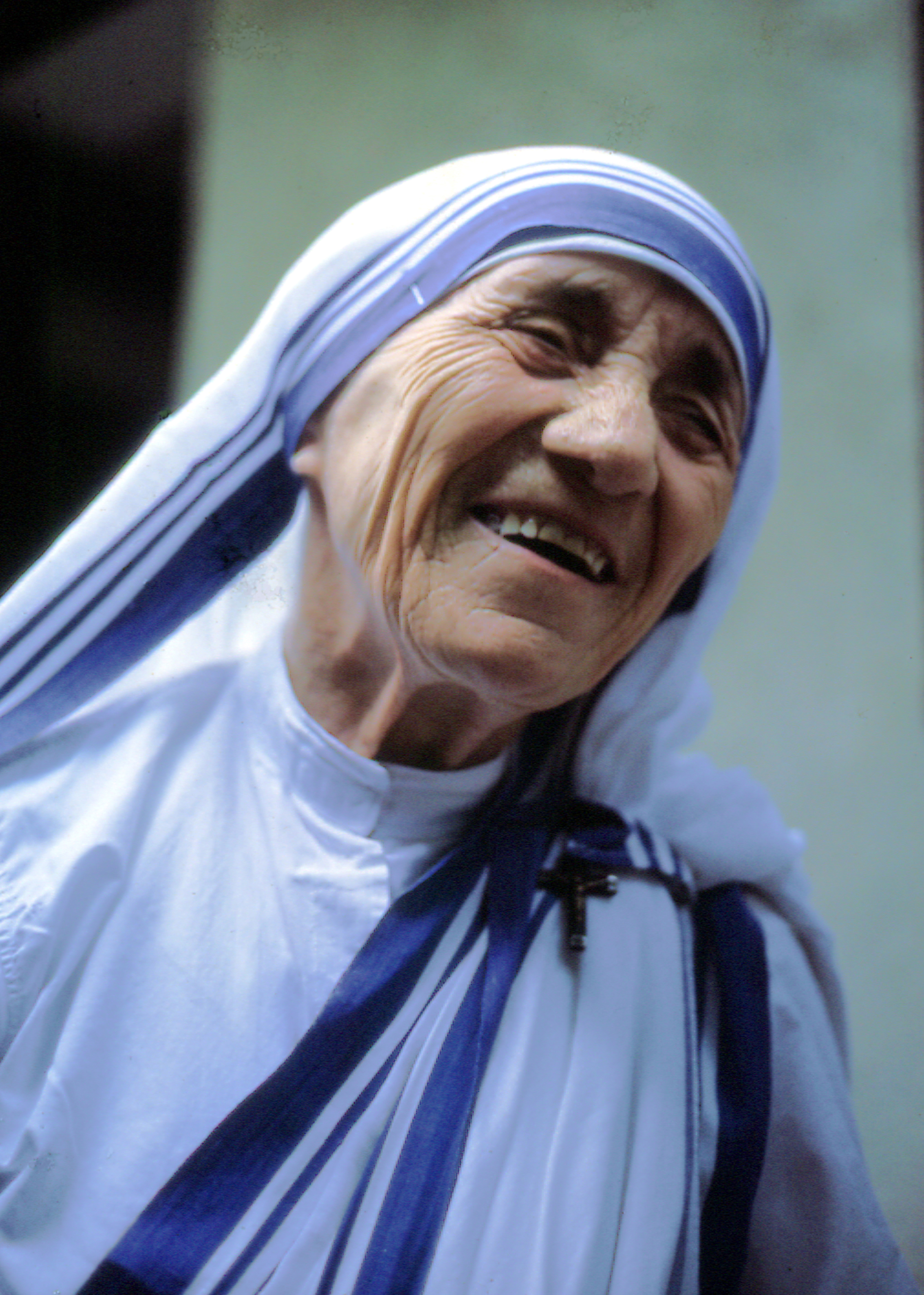
Saint Teresa of Calcutta – A Sinner


Mother Teresa has always been a saint, that is in the public opinion. Her selfless service to the least of these has inspired generations. The world officially granted her the status of a “civil saint” when she received the Nobel Peace Prize in 1979. It does not get better than that. In the truest, most literal church-sense of the word, as Protestants, we would have to say she received her saint status at Baptism. That was the day after she was born. She had not helped anyone then. Sainthood is not something we can earn but a gift from God. Saints are those called by God to be God’s people.

Imagine the world had no images of her with suffering little children. What remains of Mother Teresa, when you take away the millions of dollars raised over the course of her career? What if her wealthy father had not died when she was only eight years old? She may have stayed in her native Balkan region, never even making a trip to India. But he did, and she did, and that changed the world. Mother Teresa has been celebrated – maybe even venerated – by people of all faiths or no faith at all. She served as a perfect example of faith bearing fruit.

But then she also ran an international organization – Missionaries of Charity – with various clinics, hospitals and hospices. As of 2012 more than 4,500 nuns worked in 133 countries supporting 710 facilities. The moment you get involved in an organization of that size you lose the innocence of just gathering a handful of faithful around you. Every saint is always also a sinner. Mother Teresa is no different. There has been constant criticism of sanitary conditions and religious practices. Where two or three are gathered in Christ’s name they are bound to mess up. That is the risk you have to take whenever you do something significant or holy.

So last Sunday it happened that the Bishop of Rome agreed with the world and finally called Teresa a Saint, almost 20 years after her death. There is a lesson to be learned from that process: Do not wait to understand yourself as a saint. You are a saint right now. You can go out and do good right now. You do not need to wait for any authority’s approval or recognition. You may just gather a few people and do a one time project, or you may establish a world-wide network impacting millions. Whatever you do: Do not delay and do not wait for the approval of some perceived authority. You will mess up. You will be criticized. You will be a sinner. That is what being a saint is all about.

What does the Bible say about homosexuality?

I am a white, straight, male pastor in the United Church of Christ. From 2008-2014 I was the only one in the entire state of Utah. All the other UCC pastors were female, minority or LGBTQ. Among UCC ministers it is not unusual that the white, straight, male is the odd one out and I enjoy the ride very much. If you are uncomfortable by now, you know I am writing this for you. The important issue of skin-color and race I will have to address another time. Lately I have had multiple people ask me about “the gay question”. Sometimes it’s worded, “What does the Bible say about homosexuality?”

My initial reaction is usually: “The Bible” doesn’t say anything. Because the Bible is not a book but an entire library with dozens of books in it. They were written over the course of 1,000 years in three different languages on two different continents. The Bible has contributions from nomadic peasants and highly educated scholars. There is no way they all can possible give one and the same answer to a single question.

Overall biblical authors are not very interested in questions of homosexuality. There are a few examples that are told in a matter-of-fact way without raising an eyebrow: King David addresses his lover Jonathan saying, “I am distressed for you, my brother Jonathan; greatly beloved were you to me; your love to me was wonderful, passing the love of women.” (2 Samuel 1:26) The author of the Gospel of John tells of his affection for Jesus, “One of his disciples—the one whom Jesus loved—was reclining next to him.” (John 13:23) Yes, the Bible tells stories of men loving men without question.

Then there are negative voices from times when God’s people were under attack. The Holiness Code commands, “You shall not lie with a male as with a woman; it is an abomination.” (Leviticus 18:22) And the Apostle Paul mourns, “And in the same way also the men, giving up natural intercourse with women, were consumed with passion for one another. Men committed shameless acts with men and received in their own persons the due penalty for their error.” (Romans 1:27)
The Holiness Code was written by priests who were deported during the Babylonian Exile. God’s people were afraid they couldn’t keep their cultural identity alive. It is during this period that circumcision and the Sabbath become identifiers of the Jewish people. Deviation from the norm seemed scary because those were anxious times. Similarly, when the earlier church was a minority in the largely hostile Roman Empire, Paul warned to not live like the Romans. Instead he asked the early Christians to remain distinct in their practices.

Today in North America God’s people are not under attack. We are not in a situation where we need to be afraid of the culture that surrounds us. We don’t have to hide our worship services in the Roman catacombs but can be open about our Christian faith. We don’t have to develop a rigid corporate identity because religious freedom is protected. Literally hundreds of times the Bible says: “Do not be afraid”. The Bible says that we need to tell stories of all kinds of love and celebrate them.

Three Ways That College Freshmen Do Faith Differently

At the beginning of a new school year Beloit College publishes a Zeitgeist list. The incoming class will graduate in 2020. They are mostly 18 and were born in 1998. On the 2020 Mindset List that makes them stand out in significant ways. As a pastor the following three points stand out from the original sixty:

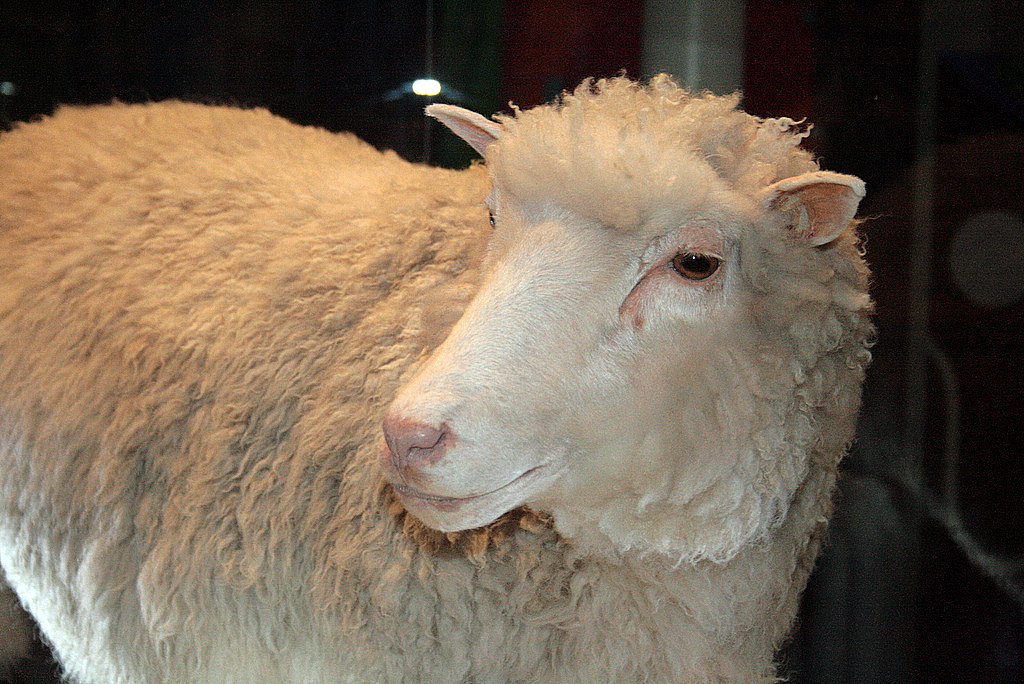
8. Cloning has always been a mundane laboratory procedure.
Dolly_face_closeup
I remember back in the 90’s cloning felt like rocket science. When sheep Dolly was cloned the whole world seem to shift. Anything was possible now. As revolutionary as advances may have seemed, the reality is much less grandiose. The Clone Wars that eventually lead to Star Wars remain science fiction. Medical advances based on cloning a real and save lives every day though. Young people entering college this fall have never lived in a world without cloning technologies. The ethical questions surrounding human reproduction remain complicated. But for the most part cloning has been unquestioned mainstream practice their whole lives. There is nothing scary about reviving endangered or extinct species – unless of course our Jurassic Park fears from the 90’s are revived as well.

15. They have never had to watch or listen to programs at a scheduled time.
On-Demand
I am old enough to remember that you had to go the the living room at a set time and sit down and watch a program that was running at that point in time. If you are entering college this fall, this was not necessarily the case. This generation could always stream or DVR whatever they wanted to watch. Everything is on demand. For one reason or another the church still thinks it is wise to make everybody sit down in the pew at the same time and share an experience in the same space. With school being mostly online these days, church and movie theater are about the only places you have to attend on a schedule. That is a very high expectation.

24. Catholics and Lutherans have always been in agreement on how to get to heaven.
justification
Radicals have always used nuances of their believes to fight each other. The great in-fight of Christianity started in 1517 with the beginning of the Reformation and ended in 1999 with the Joint Declaration on the Doctrine of Justification. Since then there has been permanent peace between the two major branches of the church universal. New college students have never known a world where Christians had major disagreements on how God’s love reconciles us. They are not old enough to remember that warring fractions wanted to be better than the church next door. In their world it makes no sense that people would kill each other over issues of faith. And they are right about that: Persons of all faiths want to live in a peaceful world. Religion that focuses on being different from or better than another does not make sense.

Helping Hands at Helping Hands

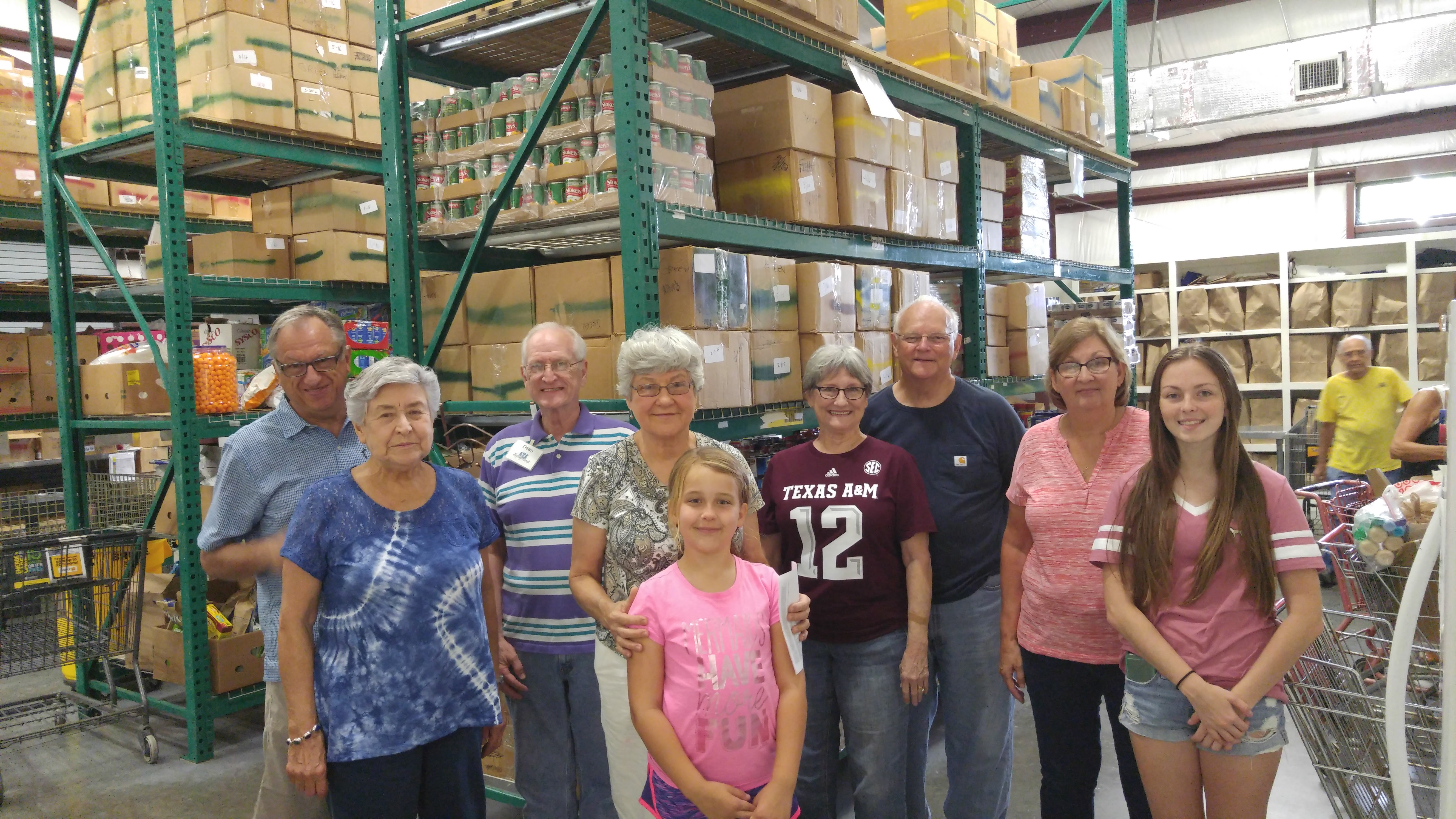
Helping Hands‘s mission is to feed and clothe those in need that live in West Fort Bend County. We have been a charter church since its inception in 1985. Every year we conduct food drives in February and August to help stock their warehouse. Every year we give 9% of our benevolence gifts to help cover overhead and make additional purchases.

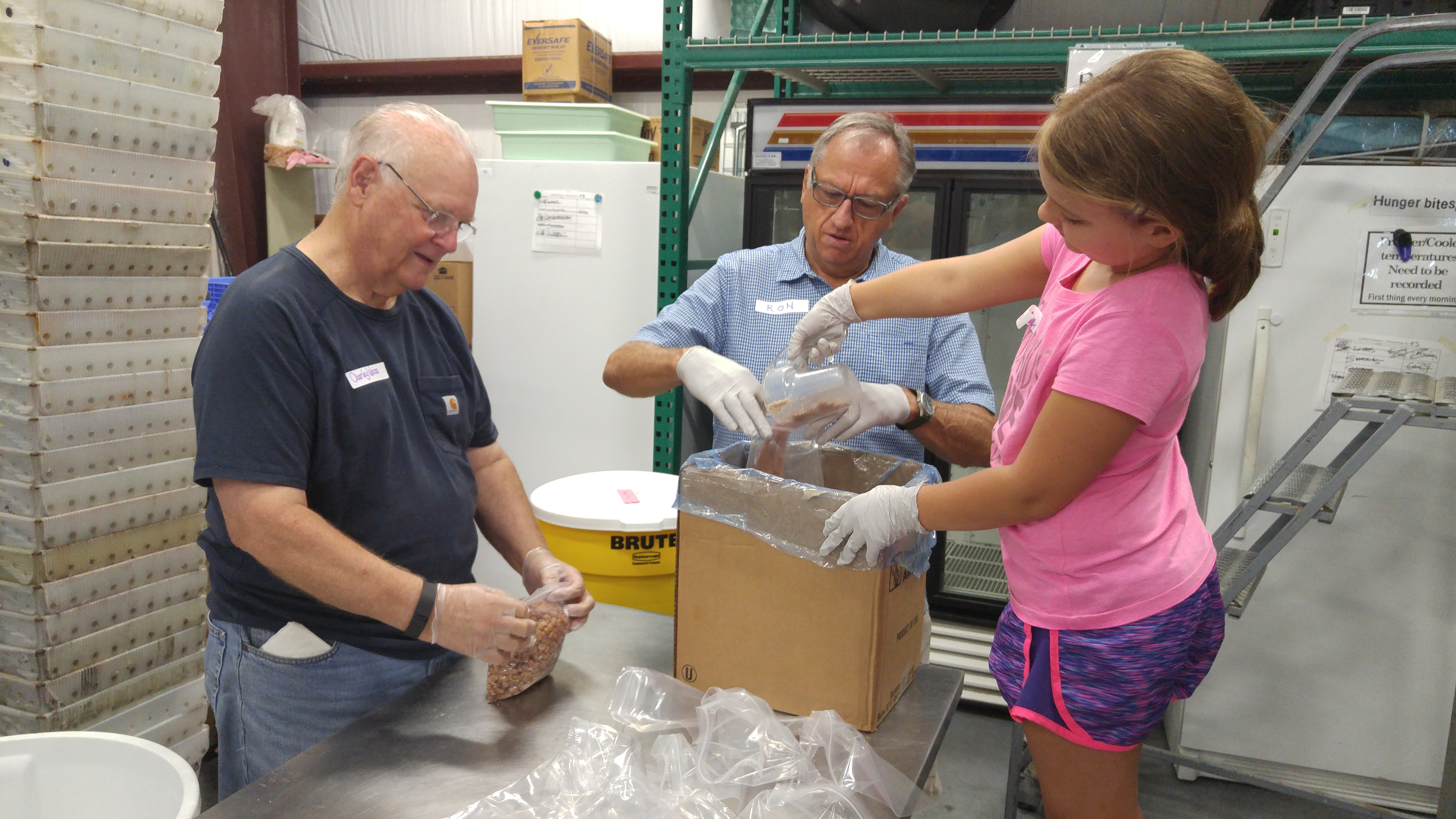
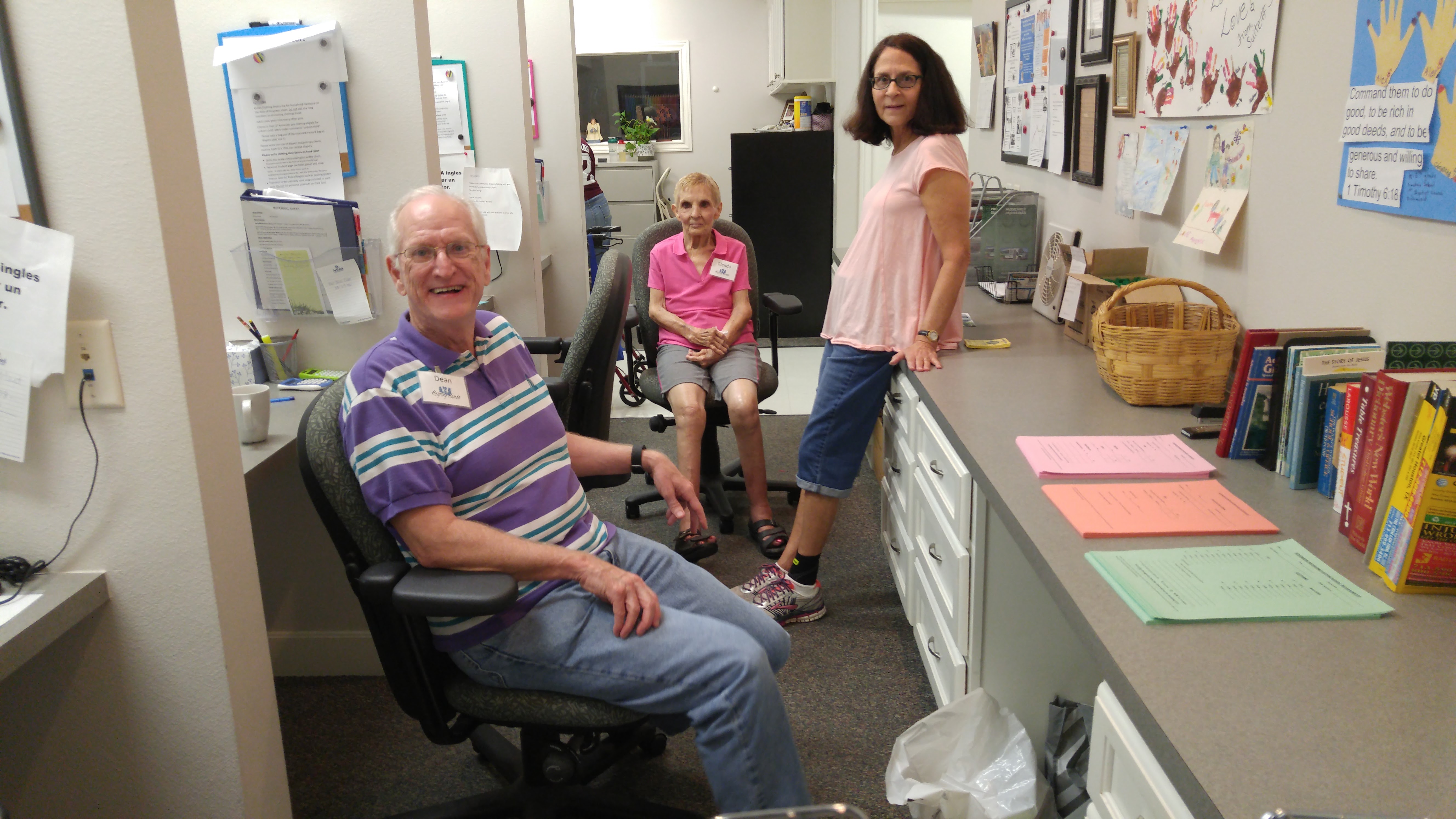
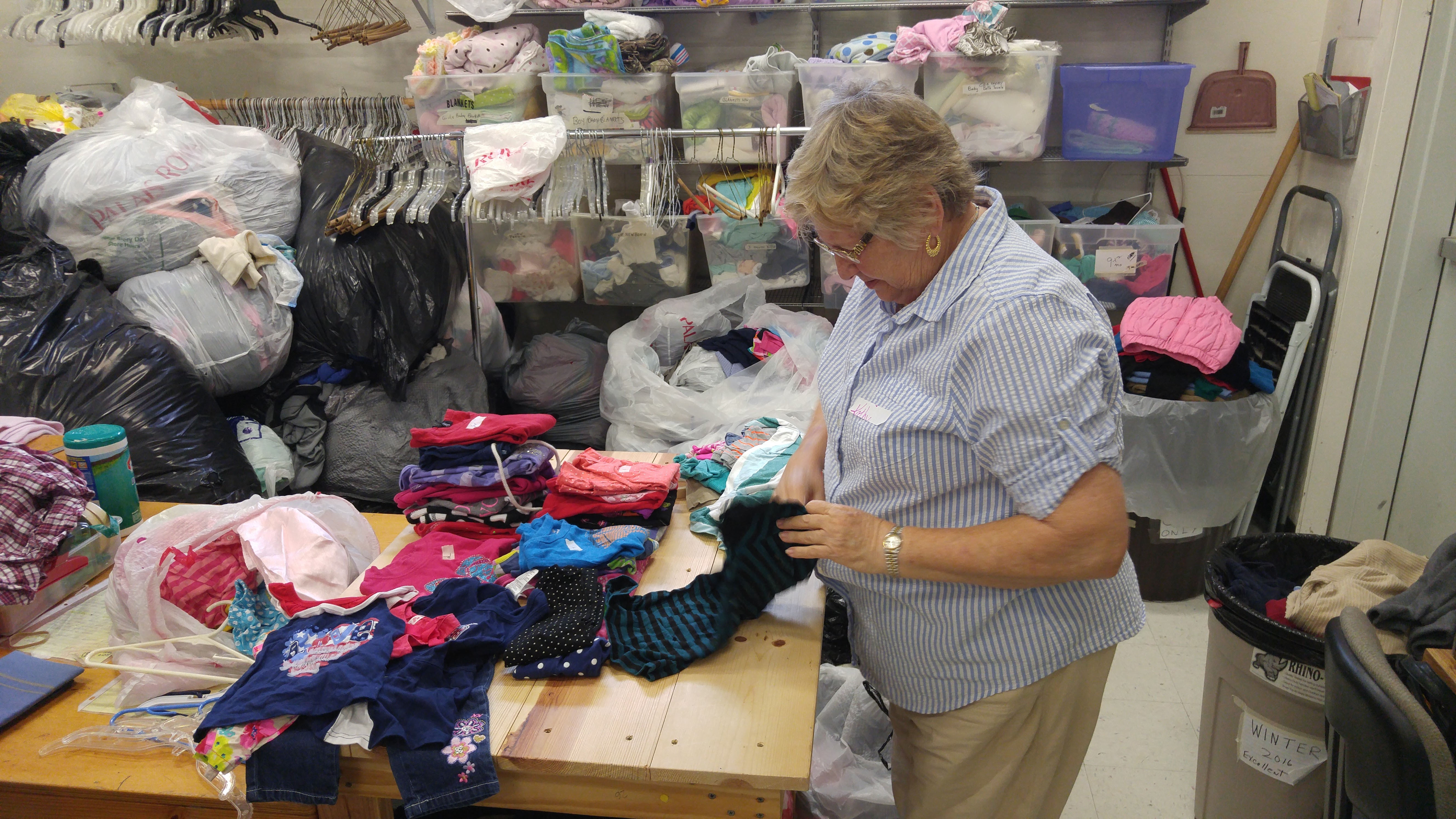
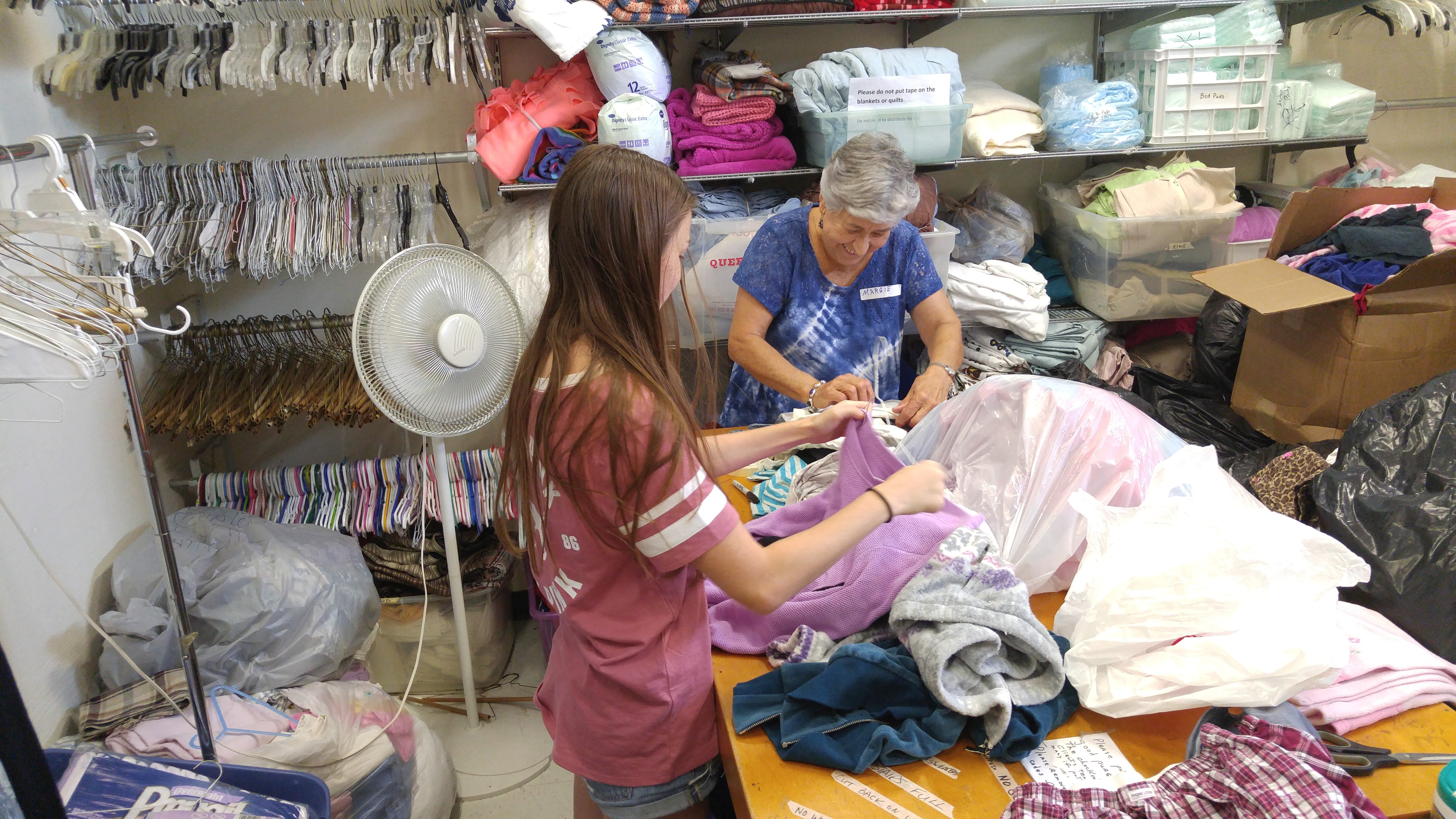
Last week we had a group of twelve volunteers bringing their 24 helping hands. Some had a great time bagging peanuts, beans and sugar. Others were sorting through clothing donations. Then we had people conduct intake interviews and put together grocery orders.

Helping Hands 2016 (1)

Helping Hands 2016 (2)

Helping Hands 2016 (3)

Helping Hands 2016 (4)

Helping Hands 2016 (5)

Helping Hands 2016 (6)

Helping Hands 2016 (7)

This warehouse is buzzing and especially on Tuesday and Thursday mornings they can always use your Helping Hands when new deliveries come in.
For more information on how to volunteer, please call (281) 232-4904

Who is in charge of preaching?

UCC_CALENDAR_2016-17_Cover_FINAL_3_grande
Our congregation just had a meeting where the entire membership approved financial reports. That’s the way we conduct ourselves as a church. There is no higher authority than the gathered congregation. Did you know that that is true particularly as it comes to preaching? Here is how that works: The congregation builds its own pulpit. Then they hire a pastor and she or he is then in charge of preparing and delivering sermons on behalf of the congregation.

Who decides what is preached every Sunday?
In too many churches pastors decide what they want to preach about. That way you usually end up with her or his favorite passages and topics. Or they are trying to please their church but telling them what they want to hear. As a liturgical church we follow the Revised Common Lectionary. The lectionary provides the biblical readings for each Sunday and Holiday. In most mainline Protestant churches you will hear a sermon on the same passages of Scripture on the same Sunday. When you are travelling or moving you fit right in and can pick up where you left off.

With the new school year right around the corner I want to bring these two strengths of our tradition together: On the second and fourth Tuesday of every month at 6 pm our Bible Study group will be discussing the lectionary texts for one of the following Sundays. Everyone is welcome! Just because you are reading this invitation here today you are qualified. It means you care about what is going on at the church. That also makes you responsible for its preaching. So please join the conversation. It all starts on August 23 at 6pm.

NYE 2016 culminates after a week of faith, fun in Florida


Written by Anthony Moujaes

Thousands of young people are returning home after a week of education, fun, sun and worship during the United Church of Christ’s National Youth Event 2016, inspired to believe in faith, kindness and service. More than 3,000 attendees converged at Walt Disney World for five days from June 26 to June 30 in Lake Buena Vista, Fla. This was an NYE unlike any other, as it marked the first time the event took place at a location other than a college campus, and the first that was co-hosted by the UCC and Christian Church (Disciples of Christ).

Hadiqa Bashir’s keynote, as one of three teenagers to speak at NYE, underscored the importance of standing for what you believe in — even when faced with danger. Bashir’s life is threatened because of her stance against early marriages of children in her native Pakistan, but she still believes in change. “I told my [family] I would fight a child marriage case against them in a court if they married me,” she explained to the crowd. “I did not want to live like a slave and get beaten like an animal.” Bashir, a recipient of the Muhammad Ali Humanitarian Award, now advocates for the right to education for young girls in Pakistan and around the world. She also speaks on the importance of protecting religious minorities and the LGBT community in Pakistan. “I believe real change is when all girls can get an education, not forced into marriage,” she said.

Two other youth speakers took the stage during NYE. Innovator Trisha Prabu works to confront cyberbullying in adolescents, which led her to create ReThink — a tech product that stops cyberbullying. Aidan Thomas Hornaday, who uses music to inspire those around him, spoke about the path of purpose he walks. He told the crowd to continually and relentlessly seek out those in need and help them.

As part of the NYE service projects, youth and young adults went to a dozen Orlando-area nonprofit agencies or churches, sorting donations of food, clothing, furniture, and toiletries and helping with landscaping and painting. Others donated their hair at the Locks of Love on-site salon, which will be used to create hairpieces for children who lose their hair during medical treatment.

Run for the White House 2016

fort bend votes

Have you seen enough Convention coverage yet? Well, here’s part of a speech that you could have heard today, or was it at last week’s convention?

“Welcome to our convention!
If this party wins the White House come November we will be in good shape. In recent years the other party has hurt hundreds of thousands of our fellow Americans by clinging to their ideology.
Can you imagine what America would look like if our party held the presidency? We would be able to set things right so that life, liberty and the pursuit of happiness mean something.
Do you remember when the other party was not as nasty in their attacks on us as they are these days? It was a more civil America, where reasoning counted for something. Comprise was not a bad word but the way of getting things done. Now they are so dug into their trenches that you can barely talk to them.
What kind of America do you want? One where our ideals are upheld or one where they have the last word? With one of our own in the White House America has always been better off. The other party has consistently hurt us in the long run. Generations after generations suffer from the hurtful policies they put in place.”

What matters for us as Christians is what policies best reflect kingdom come! If Jesus were to come back today, what kind of America do you want him to find? One where God’s love is lived out or one where political ideologies rule the day? As Christians we cannot be strict followers of one ideology or another. We can only seek the best human equivalent of God’s intention. And parts of that will be found on both sides of the aisle. None of them are a perfect match of heaven. Politics is a human endeavor. As such it is flawed. But it is necessary to seek the best solution. The key is participation in the process.

We can do this! But it takes your vote. Make sure you are registered to vote. Make sure your friends, neighbors and coworkers are registered to vote. If you are not sure you can search for yourself and everybody else in the Fort Bend County Voter Registration Database. If you have a relative or acquaintance who is not listed in that database by October 11, 2016, they won’t be able to vote come November. Now go and do what is most reflective of God’s love to the best of your flawed human knowledge!

Shooting for the stars

swissarmyknife
This is my Swiss Army Knife. There are many like it but this is mine. It says Porsche on one side because the car dealership my dad used to work for sold cars of that make. Also it has a bad dent in it so I can’t get the toothpick out anymore. I have had it for most of my life and that’s what happens. Along life’s journey we get dinged and bruised and move on regardless. This is my Swiss Army Knife.

baldrin_marquee
This is Apollo 11. Around this time of year in 1969 they took off to humanity’s first mission to the moon. They had with them all the tools they needed to be successful. Buzz Aldrin even brought along a communion set and celebrated the Lord’s Supper on the Moon. What tools would you need to sustain yourself spiritually for a trip to the moon? What skills would you need to stay in touch with the Divine if you were to spend a whole year on the International Space Station like Scott Kelly did from 2015 until 2016? Going forward this question will only grow bigger: What source of strength do you find in yourself that keeps you sane on a one-way trip to Mars?

Most of us don’t have to plan for extended trips to space. But the question remains: What tools do you need in your pocket to make it through the day? What kind of spiritual Swiss Army Knife do you need in your heart and mind?

For a long time Christians have found it helpful to memorize the Lord’s Prayer. I think of it as the long blade of my spiritual Swiss Army Knife. I can carry it with me wherever I am on life’s journey. It is helpful in many different situations. But then it’s only one piece of equipment among many others that I need in order to make it through the day or all the way to Mars.

Kalauman – drawing hope in the Philippines

Howdy St. John’s!

On Thursday, July 21st, at 6 pm, I am excited to come to y’all to talk about my experiences in the Philippines. As a young adult I spent one year there as a missionary. As a young adult I worked in a center called “Kalauman” which means “from where you draw hope”. The center’s main focus was and still is to support children and their families from the slums. This center cares for their physical, emotional, spiritual and educational well-being that one day the kids are able to support themselves to find a way out of the slums and poverty. But they are not only working with the children. For best and long term results Kalauman learned that they need to work with the families as well. Educational Programs for parents, communal networking and health support guarantees the success of the program.
Working and living with the kids and their families in the slums was one of the most life-changing experiences for me. It changed my path. Even after 20 years I am still drawing from this experience. You would think that people have a hard time believing in God while facing the challenges of poverty, mal-nourishment and violence. And yet I learned and experienced a vivid excited faith for God who loves and provides, who is a friend and supporter in their lives. Not only my life has changed as a young woman, my faith has changed as well.
Kalauman became a center “from where I draw hope” as well. Their ability to integrate every person from all walks of life, to become a center of hope, support and exchange is one big reason why their program is so successful. Many children I worked with 20 years ago I see on Facebook having children, having good jobs and have been able to overcome the spiral of poverty.
This project faces its challenges right now. The ground their campus is on belongs to the University. After 35 years they now need to claim those grounds back due to their own expansions. Now Kalauman has to raise $129,000 for their new center. Global Ministries is involved in encouraging congregations to donate money for the good cause. I am joining them by coming to you, sharing some experiences and eating Philippino food together. Come, and enjoy a great evening. Let’s help to raise funds for Kalauman so that Kalauman can draw hope from us!

This is a project worth supporting! You will not only listen to funny and informative stories, you are also invited to enjoy good Philippino food!

Blessings
Rev. Mirjam Haas-Melchior